

Environmental
Explore by pillar – Social | Governance
Our commitment to sustainable development
We believe sustainable development requires balancing good stewardship in the protection of human health and the environment with the need for profitable growth of its operations.
Global climate change
Foundever is committed to the goal of the Paris Agreement and Science Based Target initiative (SBTi) of 1.5 Celsius by 2050. Today, our teams are taking steps to greatly reduce greenhouse gases (GHG) across our operations and supply chain, all using GHG protocol and Global Reporting Initiative (GRI) frameworks.
Net zero by 2050
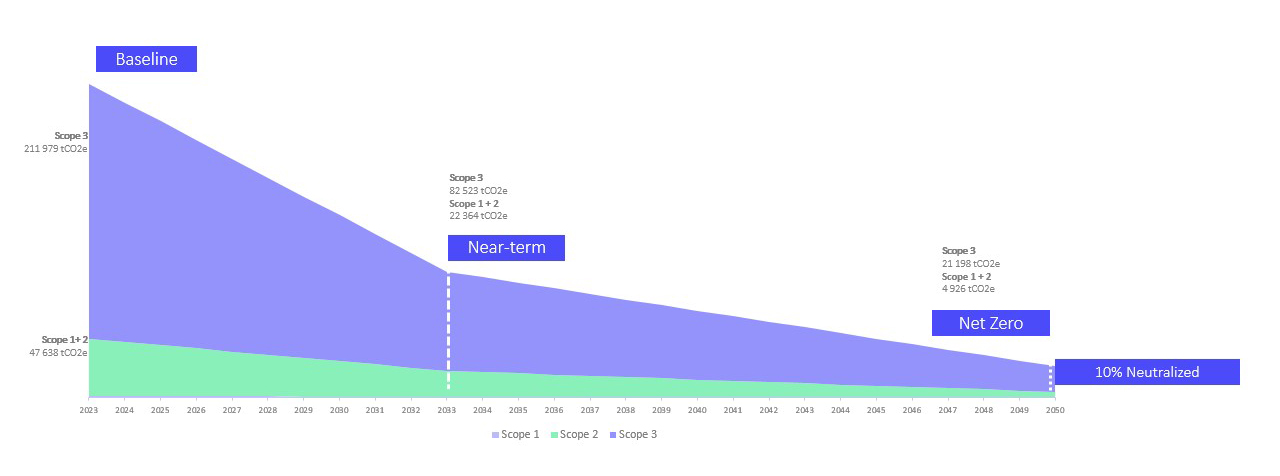
Foundever began tracking and monitoring its global GHG emissions starting in 2022 and making our Science Based Target initiative (SBTi) commitment to become Net Zero by 2050. While developing its first Carbon Reduction Plan, we have already taken significant steps to reduce its emissions through strategy and policies relating to our Net Zero strategy. Since these policies have been introduced, Foundever is now measuring emissions to fully understand any further opportunities for reductions in line with our intention to achieve a Net Zero target by 2050.
Our near-term validated transition plan
Foundever commits to reduce absolute scope 1 and 2 GHG emissions 54.6% by 2033 from a 2023 base year. Foundever Group S.A. also commits to reduce scope 3 GHG emissions 61.1% per million EUR value added within the same timeframe.
Greenhouse gas (GHG) emissions
In the modern corporate world, enhancing sustainability is not only a smart business decision — it is also a growing demand from individuals, communities and governments. With an increased awareness of the greenhouse gas effect, many forward-thinking companies and individuals have sought various methods to manage, monitor and reduce their carbon emissions.
The first step to combating rising global carbon emissions is to accurately measure them. It is crucial to understand the carbon output of individual companies, entire industries and even broader economic sectors. This data provides regulators and stakeholders with essential information needed to develop climate change policies and lower overall emissions.
Additionally, this measurement allows organizations like Foundever to identify which business practices contribute most significantly to carbon emissions. Foundever uses the Greenhouse Gas Protocol (GHG Protocol) — the most widely used system for categorizing carbon emissions — a standardized framework established by the World Business Council for Sustainable Development (WBCSD) and the World Resources Institute (WRI). The GHG reporting standards classify emissions into three categories: Scope 1, Scope 2 and Scope 3.
Foundever has made measurable progress in reducing its greenhouse gas (GHG) emissions over the past three years. Between the 2023 base year and the 2025 reporting year, total emissions decreased by 6%, from 265,373 MTCO2e to 248,577 MTCO2e. This downward trend continued year-over-year, with a further 4% reduction compared to 2024, signaling consistent improvement in emissions management.
Climate transition risk analysis
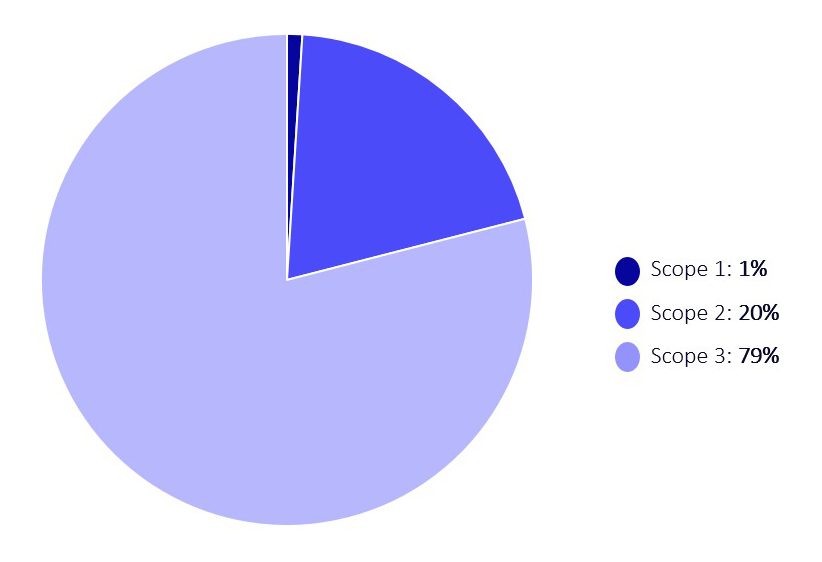
The emissions profile in 2025 highlights the company’s value chain as the primary driver of its footprint: Scope 3 emissions accounted for 79.2% of the total, while Scope 2 contributed 19.7% and Scope 1 just 1.1%. This distribution underscores the importance of supplier engagement and operational efficiency in achieving long-term climate goals.
Electricity at Foundever
In 2025, Foundever’s electricity consumption mix demonstrated a continued reliance on non-renewable sources. Of the total electricity consumed, 87% of electricity consumption originated from nonrenewable sources, underscoring the current predominance of conventional energy within the company’s overall energy mix. The remaining 12.5% of electricity was procured from renewable contracts, and an additional 0.5% was self-generated through on-site solar facilities.
Total emissions
Foundever calculated its scope 1 and 2 emissions for both market and location based as well as identified the relevant scope 3 categories for its greenhouse gas (GHG) emissions. These efforts contribute to a healthier atmosphere and support the fight against climate change on our planet.
| Total emissions | 2023* | 2025 | 2025 vs 2023 |
| Scope 1 + 2 Location-based + 3 | 267,449 | 249,291 | -7% |
| Scope 1 + 2 Market-based + 3 | 265,373 | 248,577 | -6% |
*Note: Baseline year
Business resilience to climate change

Recent tragic weather events have highlighted that climate change is no longer an abstract threat; it is an immediate and pressing reality affecting communities and businesses across all sectors. As the frequency of extreme weather events increases and legislators and courts consider environmental regulations, corporations are advised to mitigate risks and capitalize on emerging opportunities.
To address these challenges, Foundever recognizes the potential impacts of climate change on its business operations. The company plans to conduct thorough climate risk assessments to evaluate these threats. The outcomes of these assessments will be reported externally in future ESG (Environmental, Social and Governance) reports and annual CDP (Carbon Disclosure Project) assessments.
During 2025, we completed this analysis for 14% sites and 17 countries across the Foundever footprint. Findings so far, for sites reviewed, indicate no significant climate risks that require immediate action, although we continually monitor results and will take action as required.
We will continue to develop action plans with each operational assessment. There are mitigations already in place to address climate risk, including:
- Strong site business continuity plans
- Foundever geographic diversification of sites
- Key energy efficiency criteria included as part of new site selection
Climate transition risk analysis
As part of our ongoing commitment to sustainability and responsible business practices, Foundever is actively addressing Climate Transition Risk in our strategic framework.
By analyzing these risks, Foundever can identify vulnerabilities and opportunities within our operations and service offerings, allowing us to adapt proactively to the evolving landscape. This understanding is vital for us, as it not only safeguards our business against potential disruptions but also positions us as a leader in the transition toward sustainable practices.
The key areas of assessment will include:
- Physical risks
- Transitional risks
- Reputational risks